Guide no. 04
Wine weekend in the Languedoc
10 estates to visit, the method and the tasting notebook.
For 15 years, Languedoc has been going through the most spectacular wine revolution in France. Family estates converted to organic, rediscovered old vines, single-plot cuvées praised by critics: what was until recently the region of table wine is now one of the most exciting terroirs in Europe. But that richness is also the difficulty. A thousand estates, four major appellations, ten grape varieties to understand. Without reference points, you go round in circles. You taste too many estates in a day. You come home with 60 bottles you never open. You miss the encounters that make the difference. This guide gathers 10 estates spotted around Casa Sauvage and Béziers, from the most accessible to the most confidential. It gives you a 5-minute key to Languedoc, the rules for booking well and being a good guest, foolproof food and wine pairings, and three weekend itineraries. The accompanying spreadsheet tracks your tastings, your budget and your cellar back home. Our conviction: a successful wine weekend is measured not by the number of bottles brought back, but by the number of precise memories you keep. This guide helps you aim for the latter.
Contents
- Understanding Languedoc in 5 minutes
- 10 estates to visit (near Casa Sauvage)
- How to book and be a good guest (as a visitor)
- Simple food and wine pairings to recreate at home
- Three weekend itineraries (2 or 3 days)
- Building your home cellar (once back)
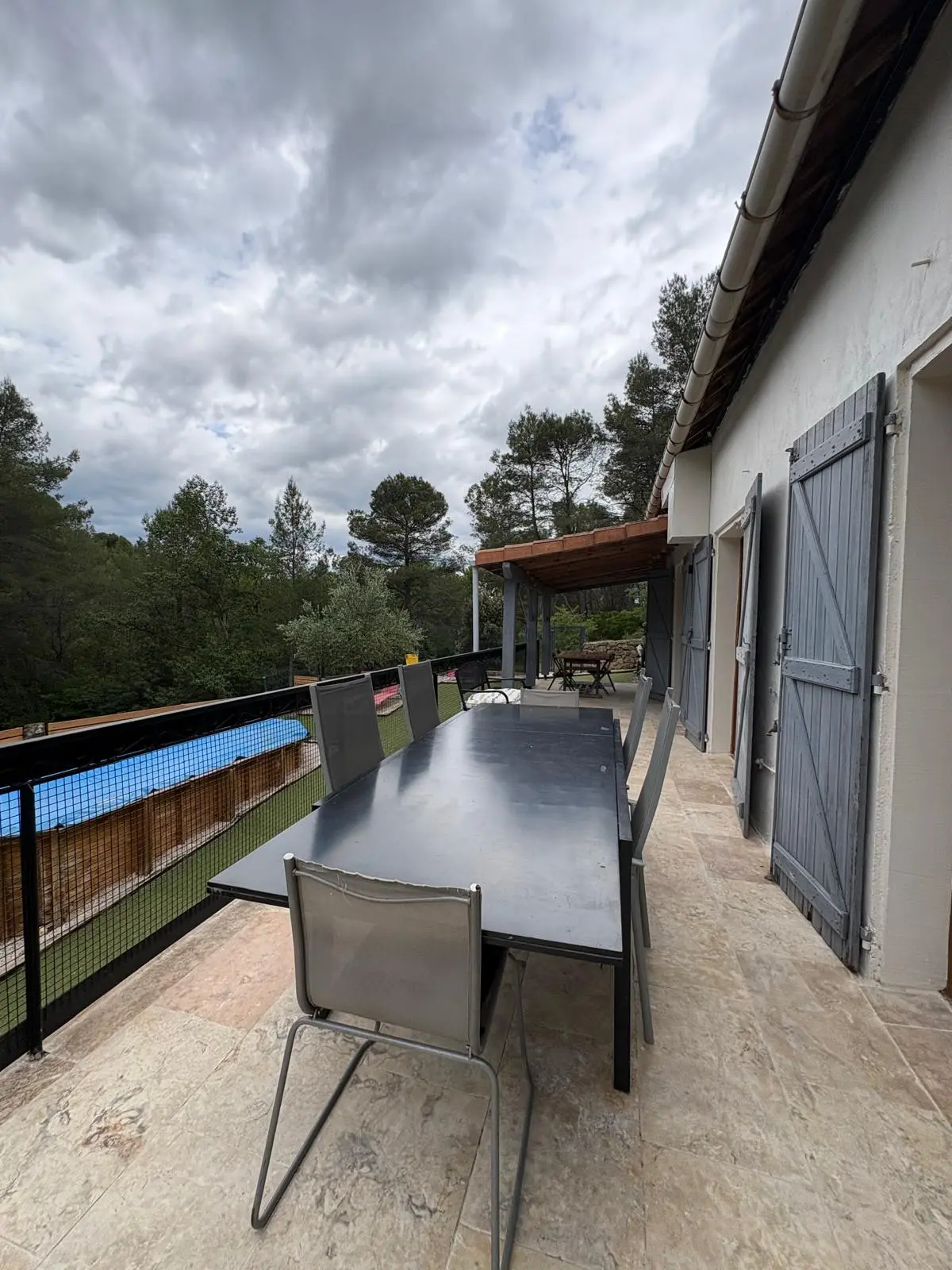
This guide was written for stays at Casa Sauvage, a villa for 18 people deep in the forest near Béziers. The vineyards around the villa.
Languedoc, a wine region to discover
Languedoc is one of the largest vineyards in the world, and one of those that has changed most in thirty years. Winegrowers have replanted grape varieties suited to the climate, reduced yields and developed organic farming. The result: a wide variety of wines, often at very reasonable prices, and estates where you are welcomed by the people who make the wine.
Around Casa Sauvage, two appellations dominate: Saint-Chinian, with its schist soils in the north and clay-limestone in the south, and Faugères, entirely on schist, known for its deep reds. Our page Saint-Chinian and Faugères vineyards presents both terroirs in detail.
A carefree wine weekend
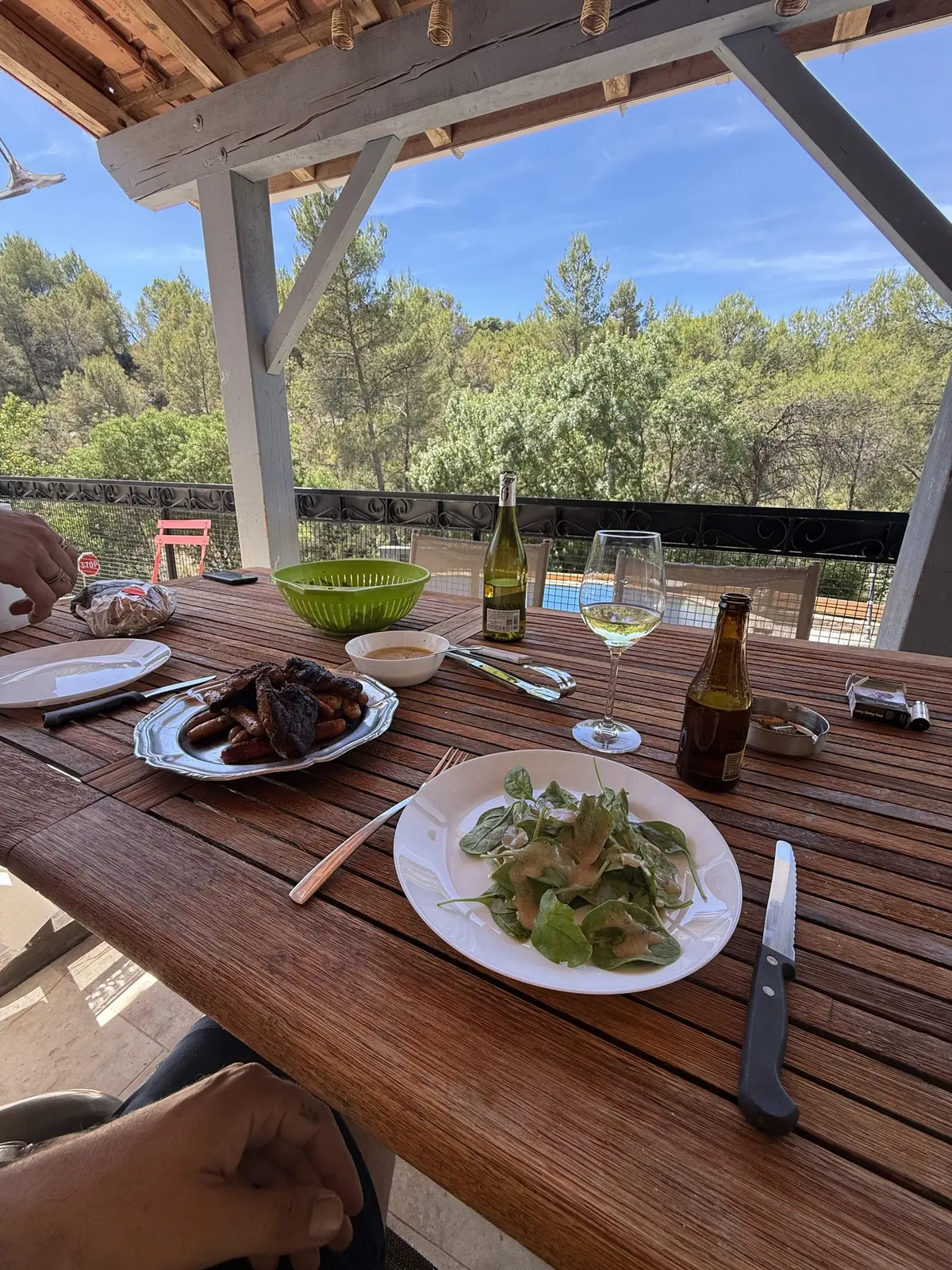
The great advantage of a stay in a private house is that no one has to drive in the evening. You visit two estates a day, bring your bottles back and open them at dinner, on the terrace. With two equipped kitchens, it is easy to prepare simple food and wine pairings: the guide suggests several, based on local produce.
The guide presents ten estates near the house, how to book a visit and how to behave as a visitor, as well as three weekend itineraries over 2 or 3 days.
Combining wine, nature and heritage
A successful wine day alternates tasting and discovery. In the morning, a cellar; at noon, lunch in a village; in the afternoon, a walk on the greenway or a swim in the Orb; in the evening, the day’s wines at the table. The tasting notebook provided in Excel helps you keep track of every wine tasted.
Frequently asked questions
Do visits need to be booked?
Can we come as a group of 15 or 18?
Read also